PoE 2 Temple Map Guide: Read Routes Before You Build
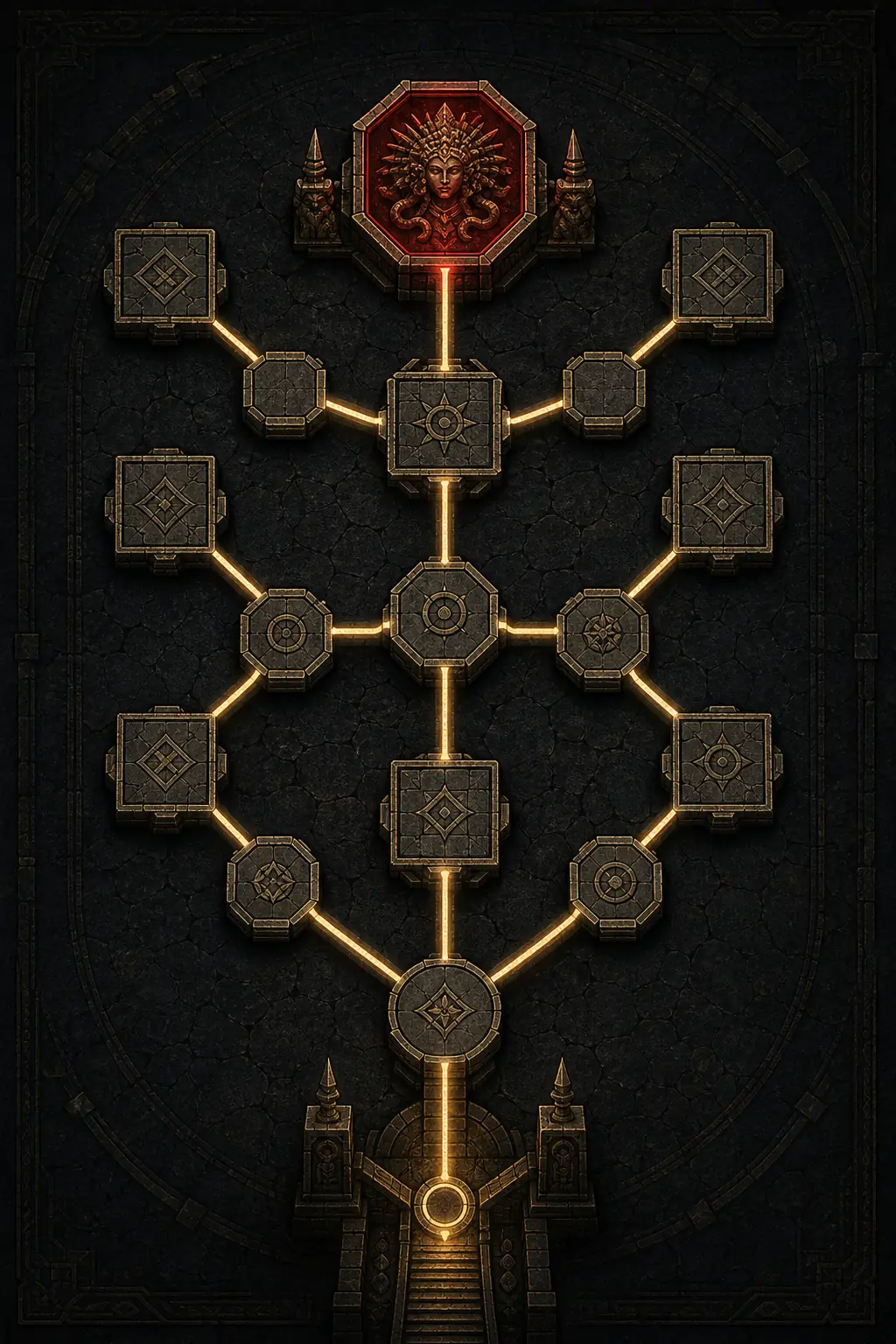
A Temple map is not just a pretty grid. Read the entrance path, branch value, support coverage, and boss route before you decide which room deserves the next upgrade.
About the editorial team
PoE2 Temple Planner Editorial Team
Editorial team
The PoE2 Temple Planner editorial team prepares practical Temple guides using the linked official patch notes, game-data references, and clearly identified community sources.
Editorial standard
Editorial note: This guide summarizes the sources linked on this page. Strategy recommendations are editorial guidance and may change with game updates.
On this page
Opportunity and search intent
GSC had no 10-30 position opportunity with impressions above the threshold, so the topic came from Similarweb keyword generator validation. Phrase match found `poe 2 temple map` at window volume 500 and difficulty 3, while related tabs connected it to planner, builder, sheet, and Vaal Temple terms. Existing pages own planner, layouts, room connections, rewards, and Atziri boss intent; this page owns map-reading and route/pathing decisions.
Quick map check: four questions before you spend a room
If you only remember one rule, make it this: the best-looking room is not the best room unless the map can carry it. A route that reaches the payout, keeps support close, and preserves a backup branch is usually stronger than an isolated Tier 3 dream.
| Map signal | Question | Best action |
|---|---|---|
| Entrance route | Can the main path reach the room chain without wasting branches? | Use this page |
| Support coverage | Do Generator, Thaumaturge, Spymaster, or Golem Works help more than one important room? | Use this page |
| Finished layout | Do you need a ready-made currency, XP, or boss setup? | Use Best Layouts |
| Room meaning | Do you need a fast room-family lookup table? | Use the Cheat Sheet |
How to read a PoE 2 Temple map
Start at the entrance and draw the realistic route first. Do not start from the most valuable-looking reward room. In real Temple planning, the map decides which rooms can be saved, upgraded, or ignored.
A useful map read has three layers: the route you will actually run, the branch that carries reward value, and the support cluster that makes that reward better. If those three layers point in different directions, the Temple usually becomes expensive to rescue.
The map guide also protects you from a common mistake: treating every branch as a possible final plan. A branch is only worth preserving when it improves the same goal as the rest of the run.
Pathing priority: route, branch, support, boss
Use the route first, then the branch. Currency paths usually want a compact value branch with Smithy, Alchemy Lab, Reward Room, Spymaster, or Thaumaturge. XP paths want density and safe flow. Boss paths need Atziri access plus enough fallback value that a messy fight does not ruin the whole Temple.
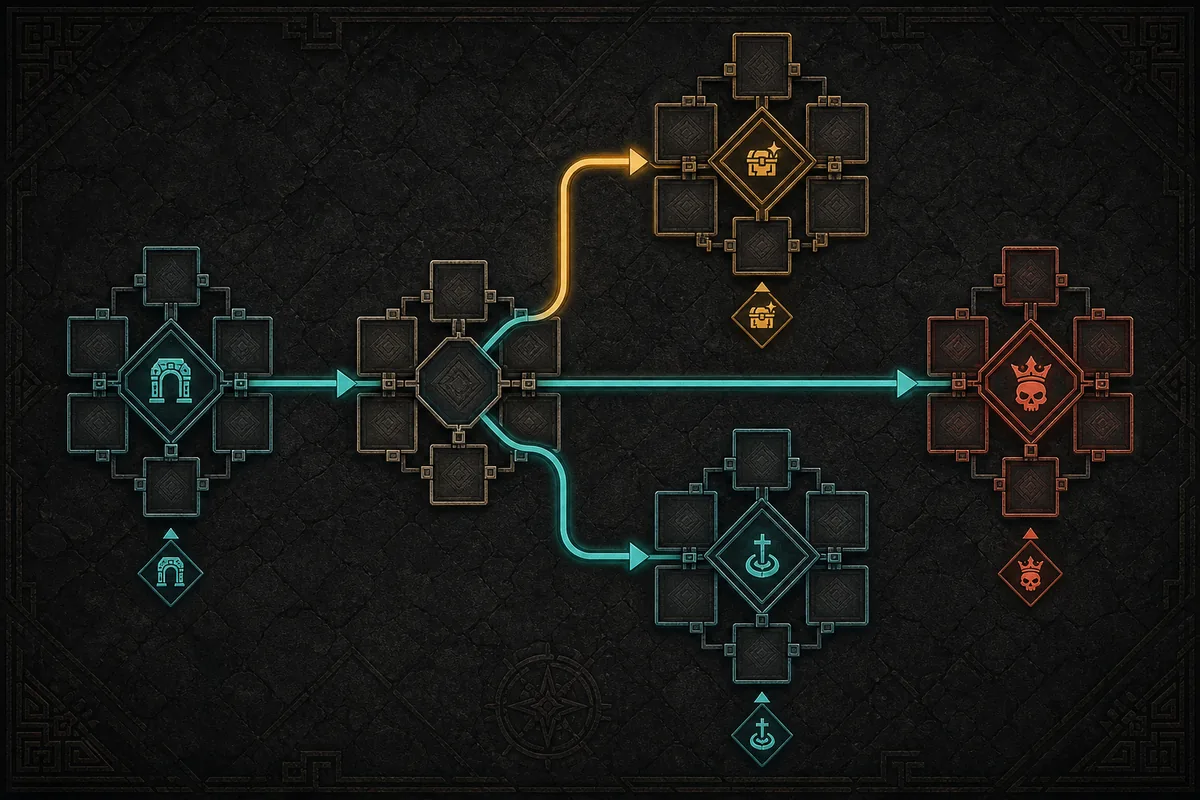
The second image below is an editorial route-flow diagram, not an official screenshot. It shows how one map can split into a direct route, a reward branch, and a support branch. In practice, your decision is whether the branch helps the same payout as the main route.
Temple map, layout, planner, and cheat sheet: where this page fits
A map guide is not the same as a finished layout article. The map guide teaches you how to read the shape you already have. A layout guide gives you target patterns. The planner validates whether your chosen target still works with placement rules.
Use this split to avoid cannibalization: map/pathing decisions belong here, preset farming builds belong to the layout page, quick room-family lookup belongs to the cheat sheet, and the interactive editor stays on the homepage.
| Need | Best page | Reason |
|---|---|---|
| Read the current map shape | Temple Map Guide | Route and branch decisions |
| Use the interactive editor | Homepage planner | Tool intent |
| Copy a finished setup | Best Layouts | Preset farming goals |
| Check room families quickly | Cheat Sheet | Lookup intent |
Generator coverage is a map problem, not only a room problem
Generator looks simple until the map is awkward. A strong Generator position touches several planned rooms or lets you pivot between loot, XP, and support. A weak Generator position lights up isolated rooms that do not help the route.
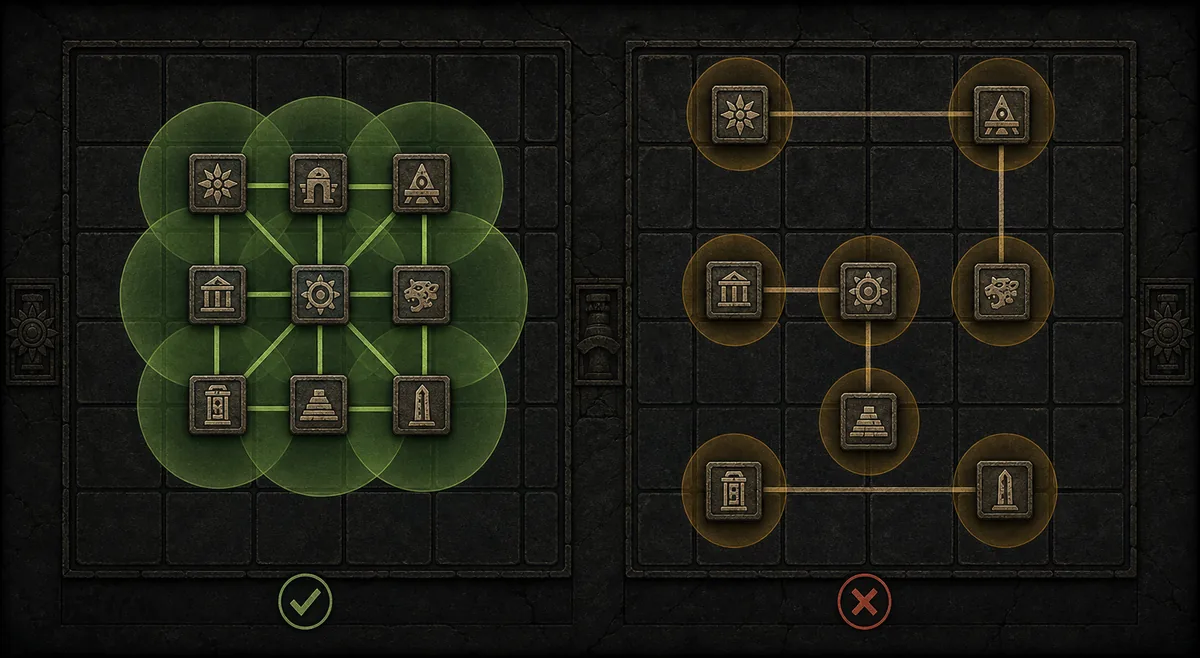
When the map is messy, do not ask whether Generator is good in general. Ask whether this Generator placement supports at least two rooms you already care about. If the answer is no, another support room or a direct reward room may be cleaner.
A practical map workflow before entering
First, mark the entrance path and the likely end point. Second, choose one payout goal: currency, XP, corruption, boss, or recovery. Third, keep one backup reward branch in case the perfect route collapses. Fourth, check support coverage before spending late upgrades. Fifth, open the planner and verify the map under real placement constraints.
This workflow is intentionally conservative. It prevents the most expensive Temple mistake: building a beautiful map that cannot be reached, powered, or salvaged.
Open the planner
Validate the exact route and room placement.
Compare best layouts
Use preset goals after reading the map.
Check room connections
Confirm support families and upgrade chains.
Keyword decisions from Similarweb validation
`poe 2 temple map` is the best new-page fit because it is specific enough for route-reading content and not fully owned by an existing URL. `poe2 temple planner`, `poe 2 temple builder`, and `interactive vaal temple planner` belong to the homepage tool. `temple layout poe2` belongs mostly to the best layouts article. `temple of atziri poe2 cheat sheet` and `path of exile 2 atziri's temple cheat sheet` should support the existing cheat-sheet page and FAQ/internal anchors, not create a competing page.
Frequently asked questions
Sources and further reading
These sources support the Temple mechanics, patch context, and map-reading decisions used in this guide.
- Path of Exile 2 Content Update 0.5.0 patch notes - Official patch context for Temple room and reward changes.
- PoE2DB: Atziri's Temple - Reference for Temple terminology and room mechanics.
- Mobalytics Vaal Temple overview - Practical overview of Temple planning concepts and room decisions.
- Temple room connection cheat sheet - Internal reference for room families and support chains.
About the editorial team
PoE2 Temple Planner Editorial Team
The PoE2 Temple Planner editorial team maintains this guide and reviews it against the sources linked on this page. Corrections can be sent to [email protected].
Read the map, then test the route
Use the guide to choose the route logic, then open the planner to validate placement, support coverage, and final room access.