PoE2 Crimson Hall Guide: When the Corruption Room Is Worth Keeping
Crimson Hall searches usually point to the same decision: is the red corruption room a real payoff, a support piece, or a trap in your current Temple layout? Use this guide to decide before you spend rooms or abandon the run.
About the editorial team
PoE2 Temple Planner Editorial Team
Editorial team
The PoE2 Temple Planner editorial team prepares practical Temple guides using the linked official patch notes, game-data references, and clearly identified community sources.
Editorial standard
Editorial note: This guide summarizes the sources linked on this page. Strategy recommendations are editorial guidance and may change with game updates.
On this page
Opportunity and search intent
Search Console shows poe2 crimson hall, poe 2 crimson hall, and crimson hall poe2 gathering impressions on the generic guide URL, but no dedicated page answers whether the room should be kept, upgraded, or skipped. This page handles that narrow room decision and links back to the planner for layout testing.
Quick answer: keep Crimson Hall only when it supports a reachable corruption plan
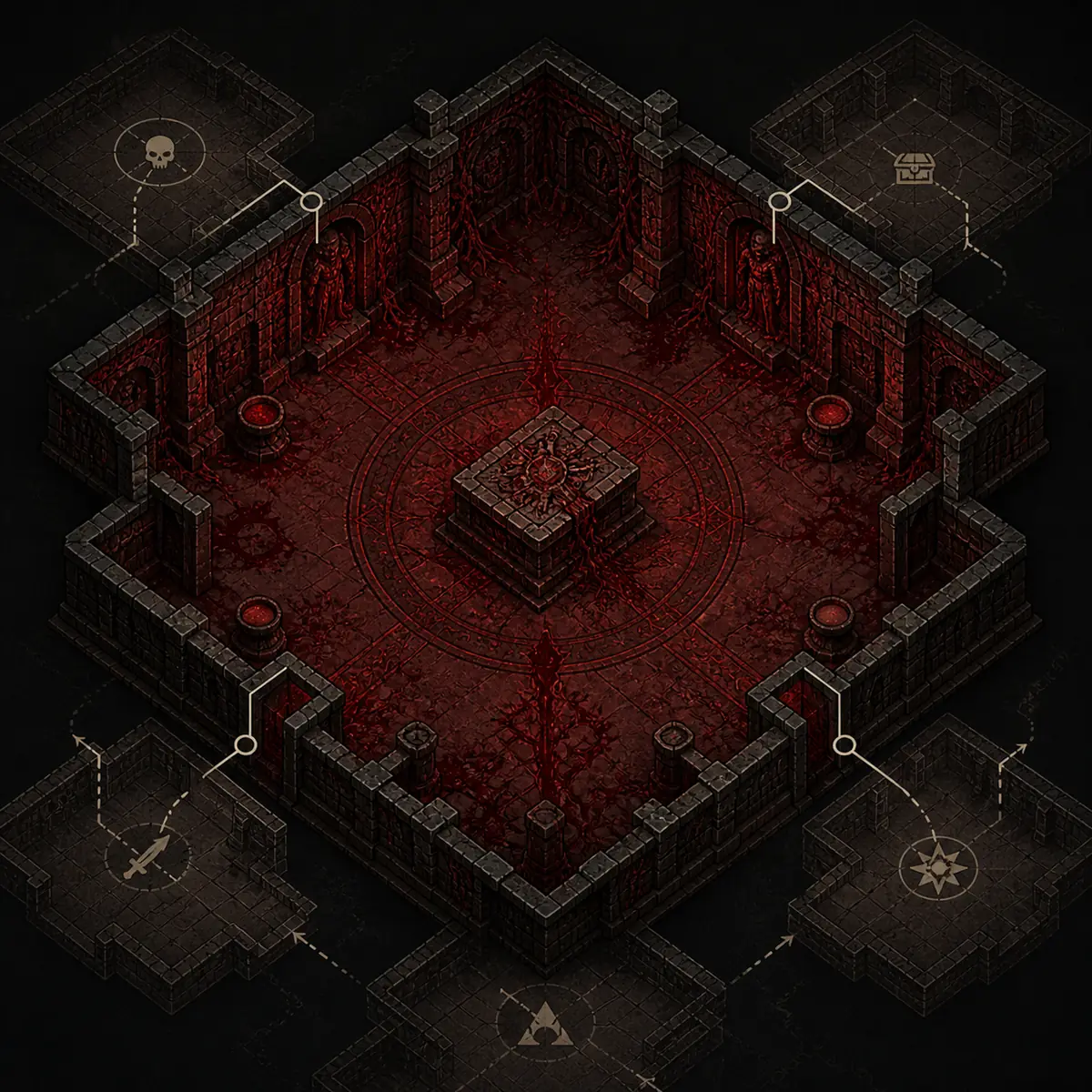
In PoE2 Temple planning, Crimson Hall is best treated as the player-facing search name for a corruption-focused room decision. Keep it when the Corruption Chamber chain is reachable, protected, and aligned with your payout goal. Skip or downgrade it when the room is isolated, the route is already committed to XP or currency, or the run has immune/blocking issues that make the room cost more than it returns.
| Situation | Decision | Why it matters |
|---|---|---|
| Connected red/corruption room near your main path | Keep and protect | Reachability turns the room from a lure into a real payout option |
| Corruption room plus Sacrificial or Thaumaturge support | Upgrade if the path is clean | Support rooms can multiply the value of the corruption goal |
| Room is isolated behind weak branches | Treat as optional | A disconnected specialist room often loses to a reliable reward route |
| Temple is built for XP, Smithy, Alchemy, or broad chests | Do not force Crimson Hall | Mixed goals usually create a weaker Temple |
| Enemies feel immune, doors are blocked, or the route cannot be finished | Salvage the run | A broken room should not consume medallions or more upgrades |
What Crimson Hall means in a PoE2 Temple run
Players search for Crimson Hall because the room feels specific, red, and high-stakes, but the practical question is simpler: are you looking at a corruption room that deserves protection? In a Temple planner workflow, answer that before you compare it to generic reward rooms.
A corruption-focused room is not automatically the best room in the Temple. Its value depends on three things: whether you can reach it, whether support rooms improve it, and whether the rest of the layout still has a coherent payout. If any of those checks fails, the room becomes a risky side branch rather than the center of the run.
Fast rule
Crimson Hall is worth attention when it is connected to the route you already want to run.
The four checks before you keep the room
Use this quick audit before spending upgrades or medallions. It prevents the common mistake of treating a red room as a must-pick just because it looks rare.
- Path check: can the entrance path reach Crimson Hall without sacrificing your main reward chain?
- Support check: do Sacrificial, Thaumaturge, or other corruption-adjacent rooms make the room stronger?
- Goal check: is this Temple actually a corruption run, or did you start with XP, Smithy, Alchemy Lab, or broad chest value?
- Stability check: can the room stay useful if one upgrade or connection roll goes wrong?
If the room passes three or four checks, it can become the anchor. If it passes only one, it is usually a distraction. If it passes two, compare it against the best direct reward room already on the board.
How to upgrade Crimson Hall without overcommitting
The safest upgrade plan is compact. Keep the corruption room close to the route, then add support only when the support room helps the same goal. Do not spend the whole Temple trying to rescue one disconnected room.
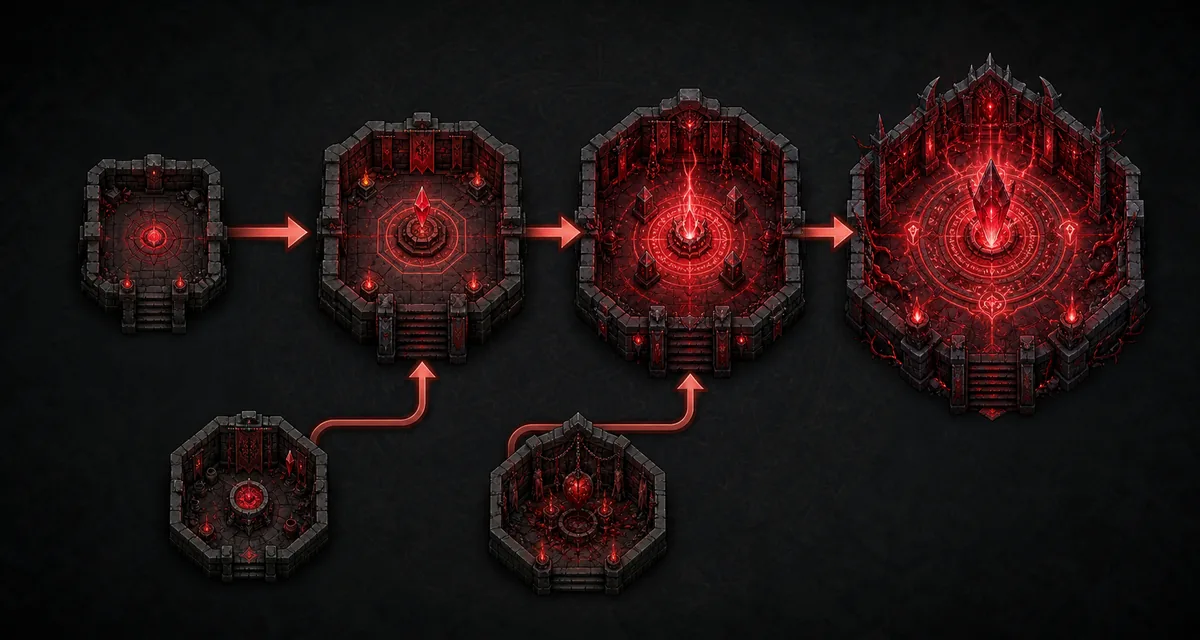
A higher-tier corruption room that cannot be reached is weaker than a lower-tier room connected to the path and supported by the rest of the Temple.
| Upgrade sign | Recommended action | What to avoid |
|---|---|---|
| Room is reachable and close to entrance | Protect the path first | Upgrading before confirming access |
| Support room appears in the same branch | Build a corruption mini-chain | Adding unrelated support rooms elsewhere |
| A stronger currency route already exists | Keep Crimson Hall as backup only | Breaking a clean reward route |
| No path after several choices | Stop investing | Using medallions to rescue a room that may not pay off |
Crimson Hall versus other valuable Temple rooms
The room competes with reward rooms, density rooms, and support rooms. That is why the correct choice changes by goal instead of following a fixed tier list.
For a corruption payoff, Crimson Hall can be strong if supported and reachable. For general currency, Smithy, Alchemy Lab, Reward Room, or Spymaster chains can be cleaner. For XP, Synthflesh, Garrison, Workshop, or density rooms usually define the layout first.
Open the Temple planner
Check whether Crimson Hall can actually connect before committing upgrades.
Compare reward room priorities
Use this when the corruption room competes with Smithy, Alchemy Lab, or direct rewards.
Use the room connection cheat sheet
Verify support families and connection logic before you lock the route.
Review best Temple layouts
Start from a goal-based layout if the room offers are confusing.
What to do if Crimson Hall feels blocked or enemies seem immune
Some searches around Crimson Hall come from frustration rather than planning: the room looks important, but the path is blocked, enemies feel wrong, or the run no longer behaves like the player expected. Treat this as a troubleshooting problem before you spend more resources.
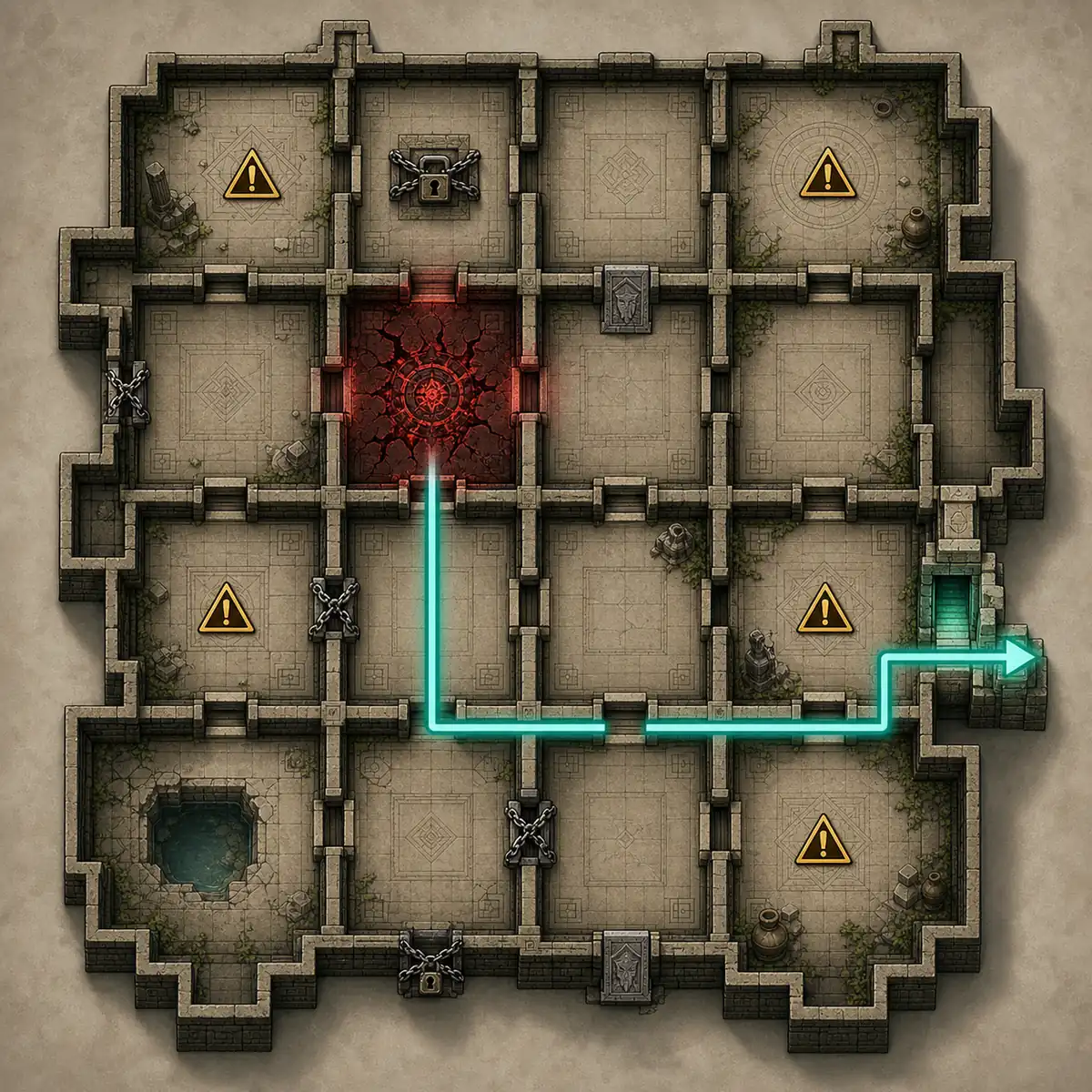
- Recheck the visible path from entrance to the room instead of assuming every adjacent tile connects.
- If enemies seem immune or the encounter feels bugged, finish the safe parts of the Temple and avoid investing more into that room.
- If Crimson Hall blocks the route to your main reward, the main reward should usually win.
- If the room is only valuable after another upgrade, ask whether that upgrade is still realistic in the current run.
The practical salvage rule is simple: complete the strongest reachable chain, record what failed, and use the planner before the next room choice. A failed corruption room is annoying, but it should not turn the entire Temple into a failed run.
A practical Crimson Hall workflow
Use this workflow whenever Crimson Hall appears and you need a fast decision.
- Mark the room in the planner and trace the shortest safe path to it.
- Name the run goal: corruption, currency, XP, boss, or recovery.
- Check whether support rooms improve that same goal.
- Compare the corruption plan against the best direct reward route.
- Commit only if the room is reachable, supported, and still aligned with the Temple goal.
Frequently asked questions
Sources and further reading
These references support the Temple terminology, patch context, and practical route-planning advice used in this guide.
- Path of Exile 2 Content Update 0.5.0 patch notes - Official patch context for Atziri Temple, room rewards, medallions, and room-use rule changes.
- PoE2DB: Atziri's Temple - Reference for current Temple terminology and mechanics.
- Mobalytics Vaal Temple overview - Practical overview of Temple Console, room cards, medallions, and planning.
- PoE2 Temple Planner room connection cheat sheet - Internal reference for support families and connection checks.
About the editorial team
PoE2 Temple Planner Editorial Team
The PoE2 Temple Planner editorial team maintains this guide and reviews it against the sources linked on this page. Corrections can be sent to [email protected].
Test the Crimson Hall route before you spend upgrades
Open the planner, trace the path, then compare the room against your current reward goal before committing the run.